Happy, Healthy and Safe Work Environment

Happy 1

The Occupational Safety and Health Act (OSHA) requires that employers maintain a healthy and safe workplace that is free from recognized hazards. This publication outlines recommendations for healthy and safe environments for typical office, retail and light-industrial facilities. Additional compliance with other requirements, such as personal protective equipment, may also be necessary depending on the facility’s operations.

Housekeeping

Good housekeeping opens aisles to permit smoother traffic flow, reduces fire hazards, lowers accident rates, increases production, decreases operating costs all while raising morale. Employees do not operate with economy and effectiveness in an environment that is in disarray and laced with potential hazard. Keep facilities clean, dry and as orderly as possible. This extends to all passageways, storerooms, service areas, workrooms and all other parts of a facility.
bad_offices

Employees do not operate effectively in environments laced with hazard

Here are some housekeeping tips.

  1. Store materials and equipment right after use.
  2. Immediately, clean up grease, oil, water and other liquid spills.
  3. Place oily rags in covered metal containers.
  4. Throw all trash into appropriate receptacles.
  5. Every passageway, storeroom, service area, workroom and all other parts of a facility must be free from protruding nails, splinters, holes, scraps, chips, debris and other hazards.
  6. When conducting wet process, maintain good drainage. Areas constantly wet should have nonslip surfaces or mats.
  7. Keep all stairways clear.
  8. Keep exit signs, fire extinguishers or other safety equipment conspicuous.
  9. Keep aisles and passageways clear and with no potentially hazardous obstructions.
  10. Storage areas must not create hazards.
    • Keep bags, bundles and containers stacked, blocked, interlocked and limited in height so that they do not slide or collapse.
    • Keep storage areas free from the accumulation of materials that may cause slips, fire, explosion or harboring of vermin.
  11. Encourage employees to report all unsafe housekeeping practices to managers.

Good housekeeping increases production while raising morale
Exits

Every facility must have enough exits to permit the prompt and unobstructed escape of all occupants in case of fire or other emergencies. Make sure every exit is clearly visible or the route to reach the exit indicated in a manner so that every occupant will know the direction of escape. Clearly arrange and mark the path of escape so that from the exit is unmistakable.

Path 2

Clearly mark path of escape

During business hours, exit doors must be free of locks and fastenings that prevent escape from the inside of any building. The door from a room to an exit can be only have side-type hinges. When 50 or more persons occupy a room or when it is a high-hazard area, the exit door must swing out in the direction of travel. When there is a possibility of fire or smoke blocking any single exit, there must be at least two means of exit away from each other.

Exit sign requirements.

  1. Every exit must have the word “EXIT” in plain, legible letters not less than 6″ high with the strokes of the letters not less than 3/4″ wide.
  2. Decorations, furnishings or other signs cannot obstruct visibility of the exit sign.
  3. Doors, passageways or stairways that can be mistaken for an exit must be clearly marked “NOT AN EXIT” or should indicate the actual use. For example, “storage room” or “to basement.”
  4. In areas where the direction to the nearest exit may not be apparent, display an exit sign with a directional arrow.
  5. Illuminate exit signs with a reliable light source when there are night operations or if there are low lighting levels during work hours.

Exit with Light

Illuminate exit signs for night operations or low lighting levels
Guardrails and Toe-boards 

A guardrails and toe-boards are required wherever persons walk near or beneath the sides of a platform or similar structures or where objects could fall from a structure on a person or machinery below.

Standard guardrails have the following features.

  1. Top rail
  2. Midrail, spaced approximately halfway between the top rail and the surface.
  3. Posts
  4. Ability to withstand 200 lbs. of force applied in any direction, at any point along the top rail.
  5. 42″ from the surface to the top rail
  6. Guardrails can be of any configuration and construction that meet the basic dimensional requirements. However, when using certain materials, follow these requirements.
    • Wood railings – The rails and posts must be of at least 2″ x 4″ stock with the posts spaced not more than 6′ apart.
    • Pipe railings – Rails and posts must have an outside diameter of at least 1-1/2″, with each post spaced not more than 8′ apart.
    • Structural-steel railings – Post and rails must be of 2″ x 2″ x 3/8″ angles or other metal shapes of equivalent strength, with posts spaced not more than 8′ apart.

Guardrail

Guardrail 

Toe-board requirements

  1. A standard toe-board is approximately 4″ in height from the surface to the top edge, with no more than a ¼” gap between the toe-board and the surface.
  2. Construction material can include any solid or perforated material, as long as the openings are smaller than 1″.
Fixed Ladders 

Fixed ladders must withstand a single concentrated load of at least 200 lbs. Rungs have a minimum 16″ wide requirement with a 12” space apart. Wooden rungs must be free of splinters and burrs. Metal ladder rungs require a minimum diameter of ¾”. Make sure ladders in areas with adverse environmental conditions are painted or treated with a preservative to resist deterioration.

The preferred pitch for a safe decent on uncaged ladders is 75 to 90 degrees. Ladders with a 75-degree pitch require a 3′ clearance on the climbing side. Ladders with a 90-degree pitch require 2½’ clearance on the climbing side. There must be at least a 7″ clearance in the back of the ladder to provide adequate toe space.

Ladders that are longer than 20′ require cages and landing platforms. Caged ladders require a platform every 30′. The landings also need side rails that extend at least 3½’ above landings. There must be a clear width of 15″ on each side of the centerline of the ladder, unless the ladder is equipped with a cage or well.
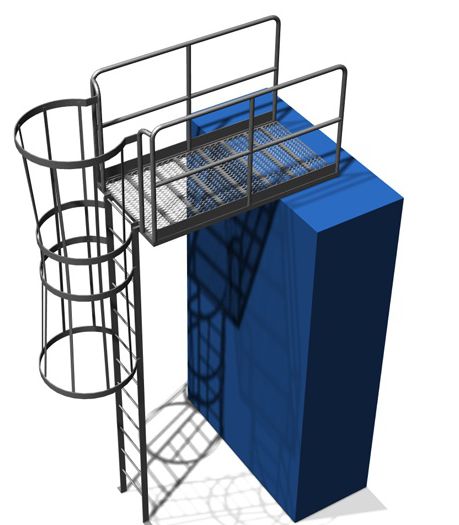
Fixed-cage-platform

Fixed ladder with cage & platform 
Stairs

Most new buildings, especially commercial facilities should have stairs that comply with current health and safety regulations. However, you should be familiar with stairs specifications, especially if any operations are in older buildings.

  1. The height of risers and the tread width of stairs need to be uniform throughout any flight of stairs with the risers open when the tread is less than 9″ wide.
  2. Make sure treads are reasonably slip-resistant.
  3. Minimum stairway width is 22″ or at least 28″ when the stairway is a means of exit access.
  4. The horizontal angle can be between 30 and 50 degrees.
  5. Keep stairs adequately illuminated.

Flights of stairs with four or more risers have the following requirements.

  1. A stair railing on each open side
  2. Stairways with both sides enclosed and less than 44″ wide require at least one handrail, preferably on the right-side descending.
  3. Stairways more than 88″ wide require an intermediate stair railing located in the middle.

The vertical height of a stair railing must be 30″ to 34″ and have a construction similar to standard guardrails.

  1. Provide railings on the open sides of all exposed stairways and stair platforms.
  2. Install handrails on at least one side of closed stairways preferably on the right side descending.

Typical Stairs

Compliant stairs (typical)

Facilities may not have spiral stairways except for special limited usage and for secondary access situations where it is not practical to install a conventional stairway.

Material Handling

Material-handling processes, including the flow of waste, scrap and rejected material, are important factors in the safe operation of any facility. Limiting the movement of the same material from area to area will reduce both the exposure to possible injuries and the physical efforts required. Consider mechanizing the process when there is frequent movement of the same types of materials over the same routes, particularly when there is manual handling of heavy or bulky objects.

An efficient route for moving materials within a facility has the following elements.

  1. Smooth floors and ramps of adequate strength.
  2. Sufficiently wide aisles.
  3. Ample ventilation for engine exhaust (for forklifts) and dust removal
  4. Good lighting
  5. Proper traffic controls
  6. Safeguards at blind corners

Effective material-flow operations include appropriate storage space. Storage space should be available at receiving, processing and shipping areas. Arrange for storage space to facilitate the placing and removing of materials with efficiency and economy.

When using material-handling equipment, allow for safe clearance when making turns, in aisles, on loading docks and through doorways.

Only trained and certified operators may drive forklifts. There are many different kinds of forklift operator programs available including hands-on and eLearning. Find the best one for your facility.

ForkLift

Hands-on forklift certification program 
Drinking Water

Provide drinking water in all workplaces.  When there are no drinking fountains within the facility, commercially available portable drinking water dispensers ensure sanitary conditions. Mobile crews or employees at normally unattended work locations must have ready access to drinking water.

Water

Provide water to mobile crews
Lighting

Adequate illumination is necessary in all work areas. Make sure there is at least 20 to 30 foot-candle power for service areas and 50 to 60 foot-candle power for areas for the performance of specific work tasks.

Lighting

Adequately illuminate all work areas

Protect lamps for general illumination from accidental contact or breakage by elevating the lamp at least 7′ from the normal working surface or using a suitable fixture or lamp holder with a guard.

Lunchrooms

Provide a covered receptacle of corrosion-resistant or disposable material in lunch areas for the disposal of waste food. Employees shall not eat or drink in bathrooms or in any other area exposed to toxic materials.

Toliets

Provide adequate toilet facilities that are separate by gender. Each toilet must occupy a separate compartment, with a door and walls or partitions between fixtures sufficiently high enough to ensure privacy. Toilet requirements do not apply to mobile crews or normally unattended locations but employees working at these places must have transportation available to nearby facilities.

Restrooms

Each toilet must occupy a separate compartment

When the following circumstances exist, separate toilet facilities for each gender are not required.

  1. No more than one person will occupy the toilet facility at a time.
  2. The door can lock from the inside.
  3. Contains at least one toilet.
Washing Facilities 

All workplaces must have adequate and sanitary washing facilities. Provide soap and individual hand towels, (cloth or paper), warm-air blowers or clean, continuous-cloth toweling. Mobile crews or employees at normally unattended work locations must have ready access to nearby washing facilities.

Washing

Industrial washing facility 
Emergency Action Plan

The development of a comprehensive Emergency Action Plan is necessary to provide emergency evacuation information to employees in the event of a fire or other emergency. The Emergency Action Plan contains the following elements.

  1. Escape procedures and exit routes
  2. Method to account for employees after evacuation
  3. Critical plant operations
  4. Assigning Employees medical duties
  5. Developing a procedure to report emergencies
  6. Implementing an accessible alarm system
  7. Preparation and training

The following section outlines an Emergency Action Plan.

floorplan2

Example of escape procedures

Emergency Action Plan

Employer name: ____________________________________

Address: __________________________________________

City, State, ZIP code: ________________________________

Phone Number: _____________________________________

Prepared by: ______________________________________

PURPOSE

The purpose of this program is to provide emergency and evacuation information to Employees in case of fires and other emergencies.

RESPONSIBILITY

________________________ is responsible for the program and has authority to make decisions to ensure the success of the program.

____________________________ will develop written instructions covering each of the elements in this program and will update the instructions as necessary.

LOCATION OF PLAN

This Emergency Action Plan is available to all employees upon request and will be located at ____________________________.

ESCAPE PROCEDURES AND EXIT ROUTES

All exits will remain unlocked during working hours. All employees must exit the facility in a quiet, orderly manner and proceed to the designated assembly area for roll call. When applicable, develop special procedures for evacuating disabled employees. During an emergency, the following departments will leave through the listed exit.

Department                                                  Exit

__________________________________  __________________________________

__________________________________  __________________________________

__________________________________  __________________________________

__________________________________  __________________________________

__________________________________  __________________________________

Attach a diagram of the facility exit routes for each department and include any special procedures for evacuating disabled employees.

ACCOUNTING FOR EMPLOYEES

After exiting, all employees are to assemble for roll call at the following location:

_____________________________________________________________________________

_____________________________________________________________________________

_____________________________________________________________________________

_____________________________________________________________________________

_____________________________________________________________________________

The following personnel are responsible for assembling all employees and conducting the roll call.

Name                                                             Name

__________________________________  __________________________________

__________________________________  __________________________________

__________________________________  __________________________________

__________________________________  __________________________________

__________________________________  __________________________________

CRITICAL PLANT OPERATIONS

To minimize damage from the emergency, the personnel listed below are responsible for shutting down an assigned critical operation. Once shutdown is completed, they will leave through the appropriate exit.

Name                                                            Critical Operation

__________________________________  __________________________________

__________________________________  __________________________________

__________________________________  __________________________________

__________________________________  __________________________________

__________________________________  __________________________________

MEDICAL DUTIES

The following personnel are certified and trained in CPR and/or general first aid.

Name                                                             Phone

__________________________________  __________________________________

__________________________________  __________________________________

__________________________________  __________________________________

__________________________________  __________________________________

__________________________________  __________________________________

REPORTING EMERGENCIES

The following personnel have the duty of contacting the police department, fire department or other emergency services.

Name                                                              Phone

__________________________________  __________________________________

__________________________________  __________________________________

__________________________________  __________________________________

__________________________________  __________________________________

__________________________________  __________________________________

__________________________________  __________________________________

The following is the preferred procedure for reporting emergencies.

_____________________________________________________________________________

_____________________________________________________________________________

_____________________________________________________________________________

_____________________________________________________________________________

_____________________________________________________________________________

ALARM SYSTEMS

Install an accessible alarm system throughout the facility to ensure that all employees know when the system is active and to commence evacuation procedures.

PREPARATION AND TRAINING

Training will cover the following:

  1. Escape procedures and exit routes
  2. Reporting emergencies
  3. Alarm systems
  4. Types of evacuation
  5. Duties and Tasks

____________________________ is responsible for training, including those employees with specific duties and tasks from this emergency action plan.

Lockout/Tag-Out

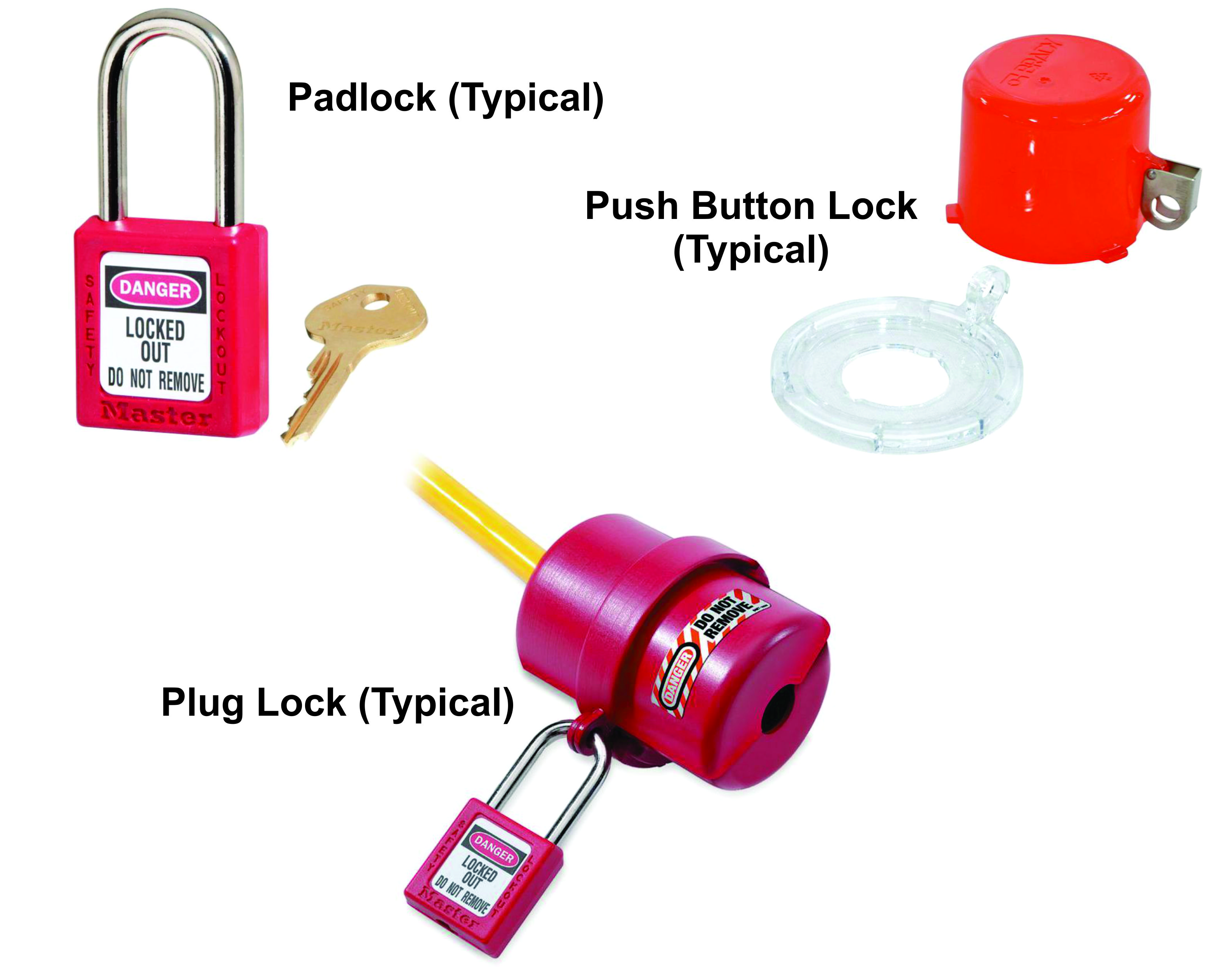
Plug and Switch DevicesA Lockout/Tag-Out program requires installing devices on machinery during servicing or repair that prevent accidental start-up or by placing tags on machinery indicating the machine should remain off. Lockout devices or tags are also necessary anytime the removal of guards or other safety devices from machinery is necessary during servicing or repair. All industrial workplaces that use machinery in day to day operations require a Lockout/Tag-out program.

This publication outlines the requirement necessary to implement and maintain an Occupational Safety and Health Administration (OSHA) compliant Lockout/Tag-out program.

LOCKOUT DEVICES

Lockout mechanisms include key locks, chains, wedges, key blocks, adapter pins and self-locking fasteners. Lockout mechanisms prevent a machine from energizing by attaching to the energy-isolating device to stop the machine from starting.

An energy-isolating device is a mechanism that physically prevents the transmission or release of energy, including but not limited to the following.

1. A manually operated electrical circuit breaker.
2. A disconnect switch.
3. A manually operated switch where the conductors of a circuit disconnect from all ungrounded supply conductors.
4. A line valve.
5. A block or any other similar device used to block or isolate energy.

Lockout devices must meet the following requirements.

1. A key must fit only one lock and no two locks may use the same key. Never use combination locks.
2. Lockout devices must be strong enough to prevent unauthorized removal without the use of excessive force with tools such as bolt cutters or other metal cutting equipment.

Lockout Examples

(Note how lock secures the energy-isolating device)
TAG-OUT DEVICES

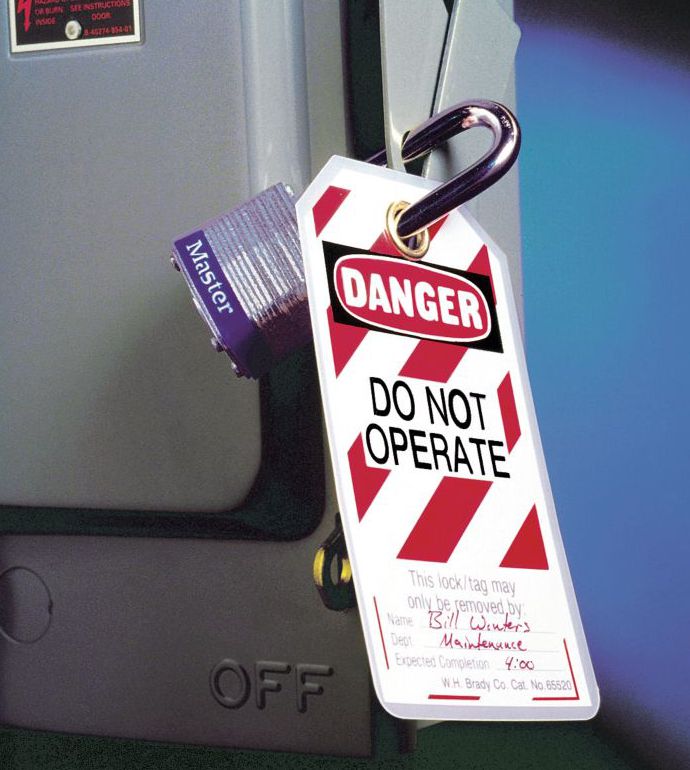
A tag-out is a prominent warning sign that can securely fasten to the energy-isolating device and indicates that the machine is to remain off until removal of the tag.

Tag-out devices have the following additional requirements.

1. Standardized print and format.
2. Constructed and printed so that exposure to weather conditions or wet and damp locations will not cause deterioration or the message on the tag to become illegible.
3. Able to withstand corrosive environments.
4. Tags and attachment devices must be strong enough to prevent inadvertent or accidental removal.
5. Tag-out devices must warn against hazardous conditions if the machine is energized and include a caption similar to any of the following.

a) “Do Not Start”

b) “Do Not Open”

c) “Do Not Close”

d) “Do Not Energize”

e) “Do Not Operate”

6. All Employees who work in the area of the machinery must comprehend the purpose of the tag.
7. Employees cannot remove, bypass or ignore l a tag without authorization.
8. Securely attach tags to energy-isolating devices so that they cannot be inadvertently or accidentally detached.
9. Attachment devices have the following requirements.

a) Attachable by hand

b) Self-locking

c) Nonreleasable type with a minimum unlocking strength of no less than 50 pounds

d) Have the general design and basic characteristics of being at least equivalent to a one-piece device

e) All-environment-tolerant nylon cable tie

Tags do not have the physical restraint of a lockout device and may evoke a false sense of security. Employees need to understand the role of tags as simply a part of the overall Lockout/Tag-Out program. Unless it can be documented that a tag is just as safe as a lock for a particular machine, a lock must be used on all machinery that can be locked out.

tags

Tag (Typical)
ADDITIONAL REQUIREMENTS

Both lockout and tag-out devices require the following features.

1. Lockout and tag-out devices have one function, to control the energy source and no other purpose.
2. Keep devices uniform within the facility and have at least one of the following identical characteristics.

a) Color

b) Shape

c) Size Lockout and tag-out devices must be capable of withstanding environmental exposures for an expected time period.

3. Lockout and tag-out devices must indicate the identity of the device. Tag with lock

Lock-Out Device with Tags (Typical)
LOCKOUT/TAG-OUT STEPS

1. Preparation for lockout or tag-out.

a) Employees who participate in the lockout/tag-out process must understand the type and magnitude of energy that the machine utilizes, and the related hazards.

b) Notify all employees who use of the machine or work in the general area.

c) When more than one individual is required to service a machine, a group lock- out/tag-out is necessary.

2. Shut down the machine by stopping it normally.
3. Stored energy must be dissipated or restrained by re-positioning, blocking, bleeding down or any other effective method
4. Fasten the assigned lock or tag to the energy-isolating device.
5. Verify that the locked-out machine is disconnected from energy sources.

a) After ensuring that no individual is exposed, operate the controls to make sure the machine will not start.

b) Return operating controls to their “off” or “neutral” position after the test.

6. While the machine is locked out or tagged out, there must be no attempt to operate any switch, push button, valve or energy-isolating device.
7. Restoring the machine to normal operations after servicing or maintenance is completed:

a) Check the area to ensure that no individual is exposed.

b) Ensure that all tools have been removed from the machine and that all guards have been reinstalled.

c) Remove the lockout/tag-out devices and operate energy-isolating devices to restore energy to the machine.

8. When the employee who applied the lockout/tag-out device is not available to remove it.

a) The lockout/tag-out device may be removed, provided that specific procedures and training for such removal have been developed, documented and incorporated into the Lockout/Tab-Out program.

b) The removal procedures will have the following elements.

(1) Only supervisors competent in the operation of the equipment can authorize the removal of lockout/tag-out devices.

(2) Verification that the employee who applied the lockout/tag-out device is not at the facility and that reasonable efforts have been made to inform the employees that the lockout device is to be removed.

(3) The lockout device is removed with bolt cutters or other equivalent means, resulting in the destruction of the lockout device.

(4) Ensuring that employees who applied the lockout/tag-out device has knowledge of the removal action before resuming work.

9. Outside personnel or contractors who may need to lock out/tag out a machine for servicing must submit their own lockout/tag-out procedures.

10. Each year selected Employees who are not part of the lockout/tag-out team will conduct a review of the lockout/tag-out procedures for all machinery subject to the lock- out/tag-out process.

Lockout/tag-out is not necessary for minor tool changes, adjustments and other minor servicing activities that are part of normal operations and performed using alternative measures that provide effective protection

TRAINING

Employees participating in the lockout/tag-out process are trained prior to implementing any lockout/tag-out operations. Employees whose job requires use of the machine that may need servicing or maintenance will receive training at the time of hire. Retraining is provided whenever there is a change in job assignment or equipment, or whenever a modification occurs in the facility’s lockout/tag-out procedures.

Employees participating in the lockout/tag-out process are trained in the following areas.

1. Type and magnitude of energy sources found at the facility
2. Tag-out limitations.
3. Procedures for locking-out/tagging-out energy sources
4.  Procedures for removing locks and or tags
5. Procedure for restoring energy

LOCKOUT/TAG-OUT PROGRAM

Facilities are required to develop written and detailed lockout/tag-out procedures for use during servicing or maintenance of machinery. The program should include the following. Lockout/tag-out procedures Training Forms to be used as part of the program

The following section outlines a Lockout/Tag-Out Program.

LOCKOUT/TAG-OUT PROGRAM

Employer name: ____________________________________

Address: __________________________________________

City, State, ZIP code: ________________________________

Phone Number: _____________________________________

Prepared by: ______________________________________

PURPOSE

To prevent the accidental or unexpected starting of machinery when servicing and maintenance is performed.

RESPONSIBILITY

____________________________ is responsible for the program and has authority to make decisions to ensure the success of the program.

____________________________ will develop written instructions covering each of the elements in this program and will update the instructions as necessary.

Only authorized Employees may lock out or tag out machinery and are identified on the Lockout/Tag-Out Procedure Form. Affected Employees are those individuals whose job functions requires use of the machinery scheduled for servicing or work in that area. Affected Employees are identified on each Lockout/Tag-Out Procedure Form. Affected Employees must be notified when a lock out/tag out will occur, as well as when the machinery is placed back in service.

____________________________ will ensure that affected Employees are identified and notified when a lock out/tag out will occur and when the machinery is placed back in service. All lockout/tag-out procedures are approved prior to implementation.

Lockout/tag-out procedures can be approved by the following persons.

Name                                                                                  Procedure

__________________________________  ______________________________________________ __________________________________  ______________________________________________ __________________________________  ______________________________________________ __________________________________  ______________________________________________ __________________________________  ______________________________________________ __________________________________  ______________________________________________ __________________________________  ______________________________________________

TRAINING

Lockout/tag-out training will be given to authorized Employees before they participate in the program. Affected Employees will receive lockout/tag-out training at the time of hire. Retraining will be provided whenever there is a change in job assignment or equipment, or whenever a modification occurs in lockout/tag-out procedures. will provide lockout/tag-out training and maintain a list of trained Employees, with dates of training

ANNUAL INSPECTION

Each year selected, Employees who are not part of authorized lockout/tag-out team will conduct a review of the lockout/tag-out procedures for all machinery subject to the lockout/tag-out process.

Name                                                                                  Procedure __________________________________  ______________________________________________ __________________________________  ______________________________________________ __________________________________  ______________________________________________ __________________________________  ______________________________________________ __________________________________  ______________________________________________ __________________________________  ______________________________________________ __________________________________  ______________________________________________

LOCKOUT/TAG-OUT PROCEDURE FORM

Instructions: Complete this information sheet for each piece of equipment scheduled for servicing.

Equipment: ___________________________________

Department: ___________________________________

Supervisor: ____________________________________

Date: _________________________________________

Energy sources and locations: ____________________________________________________________________________________ ____________________________________________________________________________________ ____________________________________________________________________________________

Type of lock or energy-control device: _________________________________________________

Authorized Employees: _____________________________________________________________

Procedure developed by: ____________________________________________________________

Lockout/tag-out procedure ____________________________________________________________________________________ ____________________________________________________________________________________ ____________________________________________________________________________________ ____________________________________________________________________________________ ____________________________________________________________________________________

Personal Protective Equipment

PPE

Personal protective equipment (PPE) includes items such as safety glasses, respirators, hard hats and gloves. Employers provide PPE to employees when certain tasks expose them to hazardous chemical or mechanical processes. With proper use and maintenance, PPE can reduce and even eliminate occupational injuries and illnesses.

This publication outlines the requirements necessary to implement and maintain an Occupational Safety and Health Administration (OSHA) compliant PPE program.

EYE AND FACE PROTECTION

Provide employees with eye protection and/or face shields when they use any machinery or perform any process that produces potential eye hazards from flying particles, chips, sparks, dust and from caustic liquid splashes. Additionally, have easily accessible emergency eyewash stations close to areas where there is a risk of injury to the eye or face, particularly from caustic liquid splashes.  Protective eye and face devices must comply with American National Standards Institute (ANSI) Z-87.1-1989 or be equally effective.

Safety Glasses

Safety Glasses (Typical Eye Protection) 

Eye protection and face shields should fit comfortably, and should be easy to clean and capable of being disinfected.  The fit should be snug enough to protect properly without restricting the user’s movements. Clean eye protection regularly and check daily for cracks, scratches or pits.  Badly chipped, scratched or pitted lenses indicate that the surface is broken, which greatly reduces impact resistance.

When standard safety glasses are the choice for eye protection, they must have side shields. Depending on the hazards, an eye doctor may fit an employee with safety glasses that incorporate optical correction into the protective lenses.

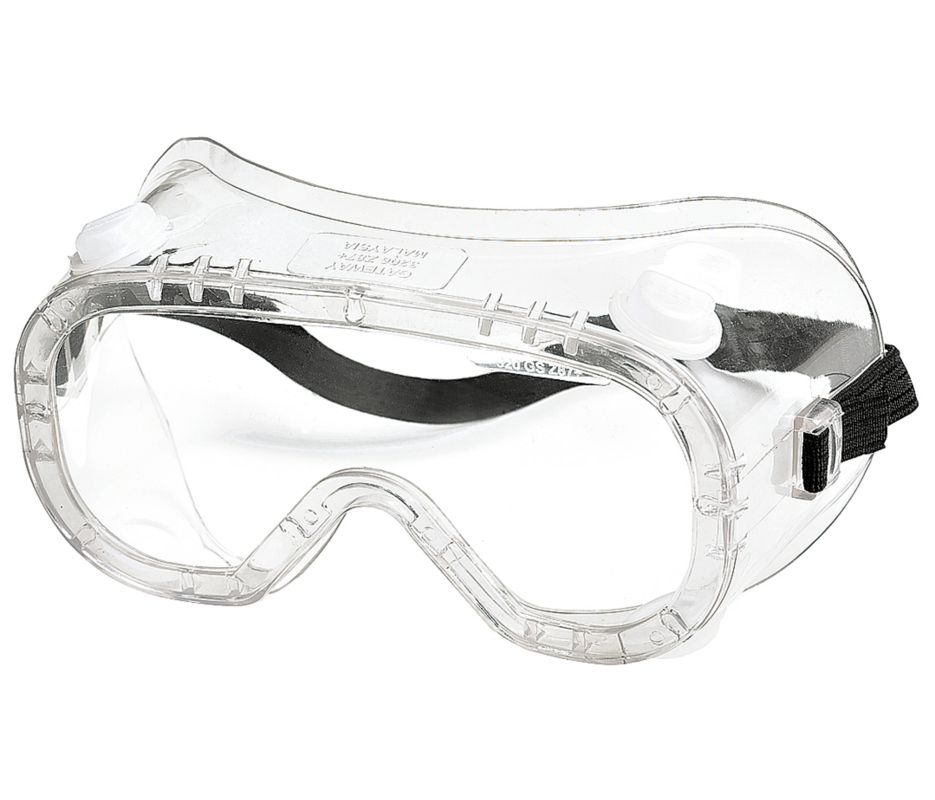
Cup goggles provide added protection in situations when a severe impact hazard coexists with a danger of particles entering the eyes from all directions.  When worn in conjunction with a face shield, cup goggles have good protection against injuries from caustics liquid splashes.  Employees who require vision correction may use goggles that fit over their corrective glasses without disturbing them.

Safety Googles

Typical Cup Googles
FOOT PROTECTION

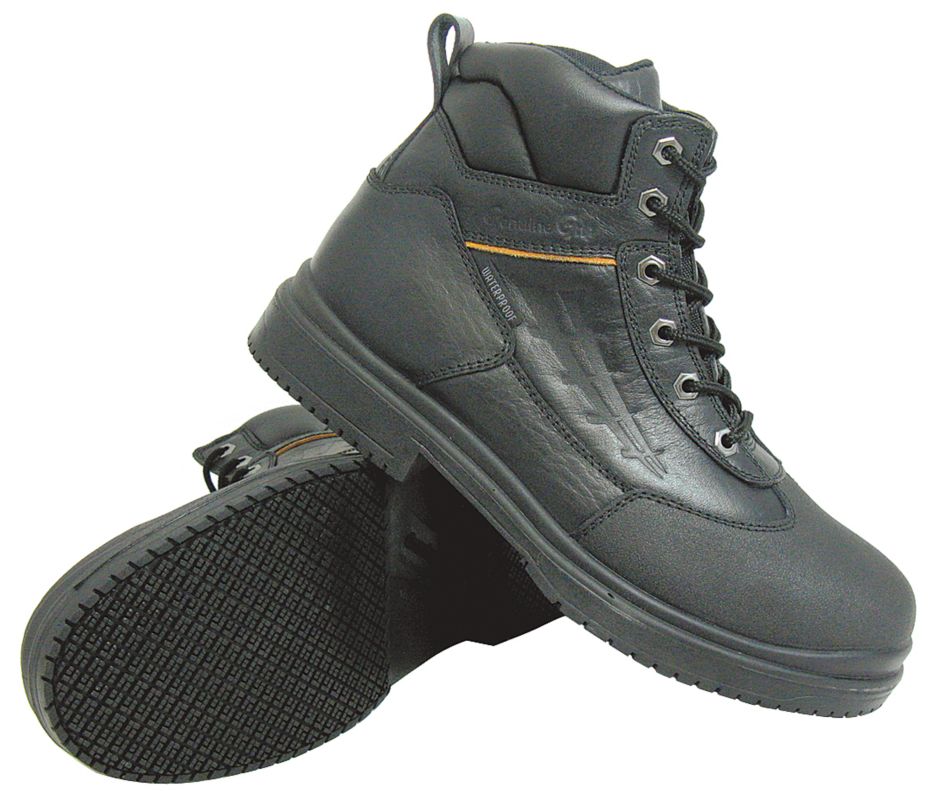
Employees must wear protective footwear when working in areas where there is a danger of foot injuries from falling or rolling objects, foot exposure to electrical hazards or hazards from objects piercing the sole. Protective footwear must comply with ANSI Z41-1991 or be equally effective.

Safety shoes

Typical Protective Footwear
HAND AND ARM PROTECTION

Employees must wear hand and arm protection whenever exposed to the following hazards.

1. Absorption of harmful substances through the skin.
2. Severe cuts or lacerations.
3. Severe abrasions.
4. Punctures.
5. Chemical and thermal burns.
6. Harmful temperature extremes.

Use the following factors to select the appropriate hand and arm protection.
1.The performance of the hand and arm protection relative to the tasks performed.
2.The conditions present.
3. The duration of use.

Gloves

Typical Impact Resistant and Anti-Vibration Gloves
HEAD PROTECTION

Provide hard hats to employees when there are potential impacts or penetration from falling or flying objects or electrical shock and burns.  Hard hats for protection against impact and penetration of falling objects must meet the requirements of ANSI Z89.1-1986.  Hard hats for protection against electrical shock and burns must meet the requirements of ANSI Z89.2-1971.

Hard Hat

Hard Hat (Typical Head Protection)
RESPIRATORY PROTECTION

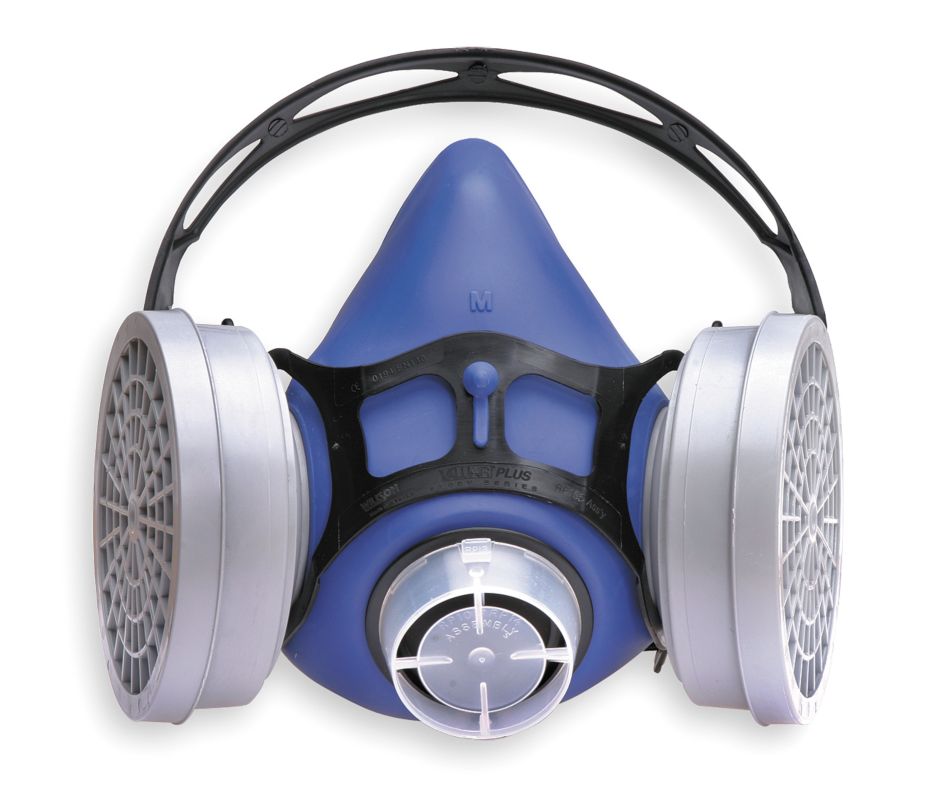
Respirators approved by the National Institute for Occupational Safety and Health (NIOSH) are supplied to employees when the workplace air is contaminated with excessive concentrations of  harmful dusts, fumes, mists, gases or vapors. OSHA requires a written respiratory protection program for the safe use, inspection and maintenance of respirators.

The respirator program must include the following.

1. Procedures for selecting respirators.
2. Medical evaluations of employees who use respirators
3. Fit-testing procedures for tight-fitting respirators.
4. Procedures for the proper use of respirators in routine and emergency situations
5. Procedures and schedules for cleaning, disinfecting, storing, inspecting, repairing, discarding and otherwise maintaining respirators
6. Procedures to ensure that there is adequate air quality, quantity and flow of breathing air for atmosphere-supplying respirators
7. Training for employees in the respiratory hazards to which they are potentially exposed during routine and emergency situations, the proper use of respirators, including putting on and removing, the limitations of respirators and maintenance procedures
8. Procedures for evaluating the effectiveness of the program.

There are many different kinds of respirator programs available including hands-on and eLearning. Make sure you select one that is OSHA compliant and is the best fit for your facility.

Resp

Half Mask Respirator (Typical Repository Protection)
HEARING CONSERVATION

 One of the most commonly violated OSHA standards is excessive noise, which can cause permanent hearing damage. Below are the OSHA standards of permissible noise exposure.

Permissible Noise Exposures

Duration per day, hours                                  Sound level dBA slow response

8 …………………………………………………………………………. 90

6 …………………………………………………………………………. 92

4 …………………………………………………………………………. 95

3 …………………………………………………………………………. 97

2 …………………………………………………………………………. 100

1½ ………………………………………………………………………. 102

1 …………………………………………………………………………. 105

½ ………………………………………………………………………… 110

¼ or less ……………………………………………………………… 115

There are two different instruments used to measure noise exposures:  The sound-level meter and the dosimeter.  A sound-level meter is a device that measures the intensity of sound at a given moment. A dosimeter is like a sound-level meter, except that it stores sound-level measurements and integrates these measurements, providing an average noise exposure reading for a period of time, such as an eight-hour workday.

Since sound-level meters measure sound at only one point in time; it is necessary to take a number of measurements at different times during the workday. If noise levels fluctuate, the amount of time noise remains at each of the various measured levels must be determined. It may also be necessary to take several measurements at different locations in the workplace.

To measure sound with a dosimeter, a microphone is attached to an employee’s clothing and the exposure measurement is read at the end of a time period.  Since the dosimeter is worn by the employee it measures noise levels in those locations in which the travels.  Also, position a sound-level meter within the immediate vicinity of the exposed to obtain an individual exposure estimate.

When noise levels are equal to or exceed the eight-hour time-weighted average of 85 dBA, a Hearing-Conservation Program must be developed and include the following.

1. Measure the noise levels in work areas for intensity and duration, with the results kept for two years.
2. Notify employees who are exposed to a minimum noise level of 85 dBA for eight hours.
3. Provide baseline audiometric examinations of employees who are exposed to a minimum noise level of 85 dBA for eight hours and annual exams thereafter, with the results kept for the duration of the employee’s employment.
4. Supply, at no cost to employees, choices of hearing protection that will attenuate (absorb) noise and keep its level below OSHA standards for permissible exposure.

a) Hearing protection is required for the following employees.

(1) Employees exposed to a minimum of 85 dBA for eight hours.

(2) Employees who have not had an audiometric exam and may be exposed to a minimum of 85 dBA for eight hours.

b) Employees, along  with  their  supervisor, should  decide  which  type  of hearing protector is most suitable for their work environment.

6. At greater than 90 dBA exposure, implement engineering controls, such as enclosing noisy equipment, or administrative controls, such as limiting time of exposure.

7. Provide training to exposed employees, which includes:

a) The effects of noise on hearing.

b) The purpose of hearing protection, the pros and cons of different types of hearing protection and how to fit, use and care for hearing-protection equipment.

Ear Muffs

Ear Muffs (Typical Hearing Protection)
HAZARD-ASSESSMENT PROGRAM

A Hazard-Assessment Program is an analysis of various functions within the workplace to determine where the use of PPE is required.  Identify the following hazards that are either actually present or likely to be present in each operation.

1. Impact
2. Penetration
3. Compression (rollover)
4. Chemical
5. Heat
6. Harmful dust
7. Light (optical) radiation

If any of the listed hazards are found, complete the following.
1. Verify the hazard in writing.
2. Select the types of PPE that will protect against the identified hazard.
3. Inform employees of the PPE selection.
4. Require employees to use the PPE.
5. Ensure that any PPE provided to employees is of the correct type and properly fits each
6. Provide training on how to use PPE.
7. Remove any damaged or defective PPE from service. The following section outlines a Hazard Assessment Program.

HAZARD-ASSESSMENT PROGRAM

Employer name: ____________________________________

Address: __________________________________________

City, State, ZIP code: ________________________________

Phone Number: _____________________________________

Prepared by: ______________________________________

PURPOSE

The purpose of this program is to assess the workplace to determine which potential hazards require the use of personal protective equipment (PPE).

RESPONSIBILITY

____________________________ is responsible for the program and has authority to make decisions to ensure the success of the program.

____________________________ will develop written instructions covering each of the elements in this program and will update the instructions as necessary.

EYE AND FACE PROTECTION

Employees must use appropriate eye and/or face protection when exposed to the following hazards.

1. Flying particles
2. Molten metal
3. Liquid chemicals
4. Acids or caustic liquids
5. Chemical gases or vapors
6. Potentially injurious light radiation

An assessment of this facility has been completed and employees ARE (  ) ARE NOT (  ) required to wear eye and face protection. Required PPE will be used in the specific situations and locations listed below.

____________________________________________________________________________________ ____________________________________________________________________________________ ____________________________________________________________________________________ ____________________________________________________________________________________

FOOT PROTECTION

Employees must wear protective footwear when working in areas where there is a danger of injuries from the following.
1. Falling or rolling objects
2. Objects piercing the sole
3. Foot exposure to electrical hazards

An assessment of this facility has been completed and employees ARE (  ) ARE NOT (  ) required to wear foot protection. Required PPE will be used in the specific situations and locations listed below.

____________________________________________________________________________________ ____________________________________________________________________________________ ____________________________________________________________________________________ ____________________________________________________________________________________

HAND AND ARM PROTECTION

Employees must wear hand and arm protection whenever there is hand and arm exposure to the following hazards.

1. Absorption of harmful substances through the skin
2. Severe cuts or lacerations
3. Severe abrasions
4. Punctures
5. Chemical burns
6. Thermal burns
7. Harmful temperature extremes

An assessment of this facility has been completed and employees ARE (  ) ARE NOT (  ) required to wear hand and arm protection. Required PPE will be used in the specific situations and locations listed below.

____________________________________________________________________________________ ____________________________________________________________________________________ ____________________________________________________________________________________ ____________________________________________________________________________________

HEAD PROTECTION

Employees must wear hard hats when working in areas where there is a potential for head injury from the following hazards

1. Falling objects
2. Electrical shock and burns

An assessment of this facility has been completed and employees ARE (  ) ARE NOT (  ) required to wear head protection. Required PPE will be used in the specific situations and locations listed below.

____________________________________________________________________________________ ____________________________________________________________________________________ ____________________________________________________________________________________ ____________________________________________________________________________________

RESPIRATORY PROTECTION

Employees must use respirators when excessive concentrations of harmful dusts, fumes, mists, gases or vapors have contaminated the workplace air. An assessment of this facility has been completed and employees ARE (  ) ARE NOT (  ) required to use respirators. ____________________________________________________________________________________ ____________________________________________________________________________________ ____________________________________________________________________________________ ____________________________________________________________________________________ ____________________________________________________________________________________

TRAINING

Provided training to each employee who must use PPE. Training will include the following.

1. Which functions require PPE and which PPE is necessary.
2. How to use the PPE properly
3. The limitations of PPE Proper care, maintenance and life of the PPE.
4. The supervisor must certify in writing that each employee has received and understands the training.
5. The certification record will identify the following.

a) Type of PPE training.

b )Name of employee.

c) Dates of training.

d) Signature of employee

____________________________ will provide all appropriate training employees who must use PPE to perform their assigned duties.

TRAINING CERTIFICATION RECORD

PPE training topic: __________________________________

Trainer: ___________________________________________

Date: _________________________________

This certifies that the following employees received training on the proper use of necessary PPE on the dates listed below.

Employee Name                            Signature                                    Date

____________________________   ____________________________   ____________________________ ____________________________   ____________________________   ____________________________ ____________________________   ____________________________   ____________________________ ____________________________   ____________________________   ____________________________ ____________________________   ____________________________   ____________________________ ____________________________   ____________________________   ____________________________ ____________________________   ____________________________   ____________________________ ____________________________   ____________________________   ____________________________

Bloodborne Pathogen Safety Program

520px-Biohazard_symbol.svg

Bloodborne pathogens are microorganisms that are present in human blood and can cause illness and disease. These pathogens include, but are not limited to, the Hepatitis B Virus (HBV) and the Human Immunodeficiency Virus (HIV). Bloodborne pathogen exposure is very rare for non-medical  industries, but all workplaces should establish a Bloodborne Pathogen Exposure Control Program to eliminate or minimize exposure, particularly for those employees trained in first aid procedures.

This publication outlines the requirements necessary to implement and maintain an Occupational Safety and Health Administration (OSHA) compliant Bloodborne pathogen program.

OVERVIEW

A Bloodborne Pathogen Exposure Control Program has the following elements.

1. Engineering and work-practice controls
2. Personal protective equipment (PPE)
3. Housekeeping
4. Hepatitis B vaccination, post-exposure evaluation and follow-up
5. Training
6. Record-keeping

ENGINEERING AND WORK-PRACTICE CONTROLS

1. Treat all human blood and bodily fluids as if infected with HIV, HBV or other disease-causing bloodborne pathogens.
2. Hand washing facilities should be readily accessible. When not available, provide antiseptic hand cleanser and paper towels or clean cloth.
3. Employees must wash their hands and/or flush mucous membranes with water after removal of gloves and other PPE immediately following exposure.
4. Remove garments immediately or as soon as possible after penetration by blood or other potentially infectious material.
5. No eating, drinking, smoking, applying cosmetics or handling contact lenses in a work area where there is a reasonable likelihood of bloodborne-pathogen exposure.
6. Perform all procedures involving blood or other potentially infectious materials in such a manner as to minimize splashing, spraying, splattering and generation of droplets.
7. Examine and disinfect equipment or areas contaminated with blood or other potentially infectious materials before returning to service.

PPE

1. Use PPE when exposure situations arise.
2. Replace all protective garments that are torn, punctured or that lose their ability to function as a barrier to bloodborne pathogens.
3. Remove all PPE before leaving a contaminated area.
4. Place all protective garments in the designated area or container for cleaning, decontamination or disposal.

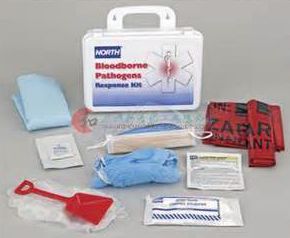
blood kit

Bloodborne Pathogen PPE Kit (Typical)
HOUSEKEEPING

1. Clean and disinfect contaminated equipment and work areas after each incident of exposure.
2. Clean and disinfect contaminated reusable first aid instruments after each incident of exposure.
3. Clean and disinfect bins, pails, cans and similar receptacles daily.
4. Do not pick up broken glass directly with hands; use a broom and dustpan or tongs.
5. Place contaminated laundry in the appropriate container and handle it as little as possible.

HEPATITIS B VACCINATION

The HBV vaccine and vaccination series is available at no cost to employees who may anticipate bloodborne pathogen exposure while performing job-related tasks. Employees may obtain the HBV vaccination after receiving required training and within 10 working days of initial job assignment, unless:

1. An employee has previously received the complete HBV vaccination series.
2. Antibody testing has revealed that the employee is immune.
3. For medical reasons, the employee is advised not to receive the vaccination.
4. The employee declines the HBV vaccination or requests the vaccination later.

An employee who declines the HBV vaccination must sign a statement indicating that they have the right to receive an HBV vaccination at no cost. (See sample of the Hepatitis B Vaccine Declination.) An employee who had an occupational exposure may also receive at no cost an HBV vaccine or a booster dose of the HBV vaccine within 24 hours of exposure.

Exposed Employees receive the following medical evaluation under the supervision of a licensed physician. An accredited laboratory must conduct all tests. All procedures are at no cost to the employee.

1. The HBV vaccine.
2. The HBV vaccination series.
3. Post-exposures evaluation and follow-up, including treatment

The post-exposures evaluation and follow-up includes the following.

1. Documentation of the route(s) of exposure.
2. A description of the circumstances under which the exposure occurred.
3. The identification and documentation of the source individual. Identification is not required if it can be establish that identification is impossible or prohibited by state or local laws.
4. Collection and testing of the source individual’s blood for HBV and HIV serological status.
5. Post-exposure treatment for the Employee, when medically indicated in accordance with the U.S. Public Health Service.
6. Counseling.
7. Evaluation of any reported illness.
8. Evaluating health care professional’s written opinion.

a) The employee will receive a copy of the evaluating health care professional’s written opinion within 15 days of the completion of the evaluation.

b) The written opinion for HBV vaccination is limited to the following.

(1) Whether the employee needs an HBV vaccination.

(2) Whether the employee has received the vaccination.

c) The health care professional’s written opinion for post-exposure evaluation and follow-up is limited to the following information.

(1) That the Employee received the results of the evaluation.

(2) That the Employee received information about any medical conditions resulting from exposure to blood or other infectious materials that require further evaluation or treatment.

d) All other findings or diagnoses are confidential and are not in the report. The health care professional evaluating an employee is provided with the following information.

(1) A copy of the OSHA Bloodborne Pathogens regulation 29 CFR 1910.1030.

(2) A description of the exposed employee’s duties as they relate to the exposure incident.

(3) Documentation of the route(s) of exposure.

(4) A description of the circumstances under which the exposure occurred.

(5) Results of the source individual’s blood testing, if available.

(6) All medical records applicable to treatment of the Employee, including vaccination status.

TRAINING

All employees with potential exposure to bloodborne pathogens will participate in training. Training should occur before the time of the first assignment to a job where exposure may exist. Any employee exposed to infectious material also must receive training. Training is annually or when modifications of procedures affect the potential for exposure.

The training program contains the following.

1. A general explanation of bloodborne pathogens.
2. An explanation of the modes of transmission of bloodborne pathogens.
3. An explanation of the engineering and work practice controls.
4. The use of PPE.
5. Information on actions to take in an emergency involving blood or other potentially infectious material.
6. Information on post-exposure evaluation and follow-up for Employees exposed.
7. Providing an accessible copy of OSHA Bloodborne Pathogens regulation 29 CFR1910.1030.

RECORD-KEEPING

Establish and maintain an accurate medical record for each employee with bloodborne pathogens exposure.

Medical records include the following information.

1. The name and Social Security number of the employee.
2. A copy of the employee’s hepatitis B vaccination status including the dates of all the hepatitis B vaccinations and any medical records relative to the employee’s ability to receive the vaccination.
3 A copy of the results from all examinations, medical testing and follow-up procedures.
4 The employee’s copy of the health care professional’s written opinion and a copy of the information provided to the health care professional.

Maintain the following Training information.

1. The dates of the training sessions.
2. The contents or a summary of the training sessions.
3. The names and qualifications of persons conducting the training.
4. The names and job titles of all persons attending the training sessions.

Maintain medical records for at least the duration of the employee’s employment, plus 30 years. Maintain Training records three years from the date of training. All medical and training records are available only to the employee, to anyone having the written consent of the employee, to the director of the National Institute for Occupational Safety and Health (NOSH) and to the assistant secretary of labor for OSHA.

WORKERS’ COMPENSATION

The Workers’ Compensation requirements for infectious diseases vary from state to state. For example, some states have a specific time frame for individuals who have had a significant exposure to potentially infectious bloodborne disease to get a baseline blood test or they become ineligible for benefits if they contract a disease.

The following section outlines a Bloodborne Pathogens Exposure Control Program.

BLOODBORNE-PATHOGENS EXPOSURE-CONTROL PROGRAM

Facility name: ______________________________________

Address: __________________________________________

City, State, ZIP code: _________________________________

Phone Number: _____________________________________

Prepared by: ________________________________________

PURPOSE

The purpose of this program is to eliminate or minimize Employee exposure to bloodborne pathogens.

RESPONSIBILITY

____________________________ is responsible for the program and has authority

to make decisions to ensure the success of the program.

____________________________ will develop written instructions covering each of the elements in this program and will update the instructions as necessary.

JOB CLASSIFICATIONS/EMPLOYEES

These job classifications listed below may experience occupational exposure to bloodborne infectious materials.

Job Title

____________________________     ____________________________

____________________________     ____________________________

____________________________     ____________________________

____________________________     ____________________________

____________________________     ____________________________

____________________________     ____________________________

ENGINEERING AND WORK-PRACTICE CONTROLS

Everyone at this facility will observe “universal precautions.” All human blood and bodily fluids is treated as if infected with HIV, HBV or other disease causing bloodborne pathogens. is responsible for examining, maintaining and, when appropriate, replacing the engineering controls on a monthly basis to ensure their effectiveness.

PPE

____________________________ will provide gloves, masks, eye protection and all other appropriate personal protective equipment at no cost to employees.

____________________________ will replace, repair or clean personal protective equipment as necessary and at no cost to employees.

HOUSEKEEPING

Equipment, work areas, first aid instruments and laundry will be cleaned and disinfected after each incident of exposure. is responsible for ensuring that all equipment, work areas, first aid instruments and laundry will be cleaned and disinfected after each incident of exposure.

HEPATITIS B VACCINATION

The HBV vaccine and vaccination series is available at no cost to employees who may anticipate bloodborne-pathogen exposure while performing job-related tasks. An employee who had an occupational exposure may receive an HBV vaccination no cost. An employee can decline the HBV vaccination or request the vaccination later, also at no cost. When an exposure incident has occurred, the exposed employee (if consenting) will receive a confidential medical evaluation and follow-up.

____________________________ is responsible for ensuring that all employees who may anticipate bloodborne-pathogen exposure or had an occupational exposure are aware of the right to receive the HBV vaccine and vaccination series.

TRAINING

All employees with the potential of exposure to bloodborne pathogens will participate in training. Training will occur prior to the time of the first assignment where exposure exists. Training is annually or when modification of procedures affects the employees potential to exposure. Any employee exposed to infectious material will receive training, even if the employee received the HBV vaccine after exposure.

____________________________ will provide all appropriate training to employees with the potential for exposure or those exposed.

RECORD KEEPING

Maintain accurate medical record for each employee with bloodborne-pathogens exposure  All medical and training records are available only to the employee, to anyone having written the consent of the Employee, to the director of the National Institute for Occupational Safety and Health (NOSH) and to the assistant secretary of labor for OSHA.

Maintain training records for three years from the date of training. Keep a copy of this plan for employee review.

____________________________ will maintain updated and accurate medical and training records.

HEPATITIS B VACCINE DECLINATION FORM

I understand that due to my occupational exposure to blood or other infectious materials that I may be at risk of acquiring the Hepatitis B virus (HBV) infection. I have the opportunity to receive the Hepatitis B vaccine at no charge to myself. However, at this time I decline the Hepatitis B vaccination. I understand that by declining this vaccine, I continue to be at risk of acquiring Hepatitis B, a serious disease. If in the future I continue to have occupational exposure to blood or other potentially infectious materials and I want the Hepatitis B vaccine, I can receive the vaccine at no charge to me.

Print Name: ____________________________

Title: __________________________________

Signature: ____________________________  Date: ____________________________

Copy of the OSHA Bloodborne Pathogens Standard can be found at 29 CFR1910.1030.